Can We Think Without AI?
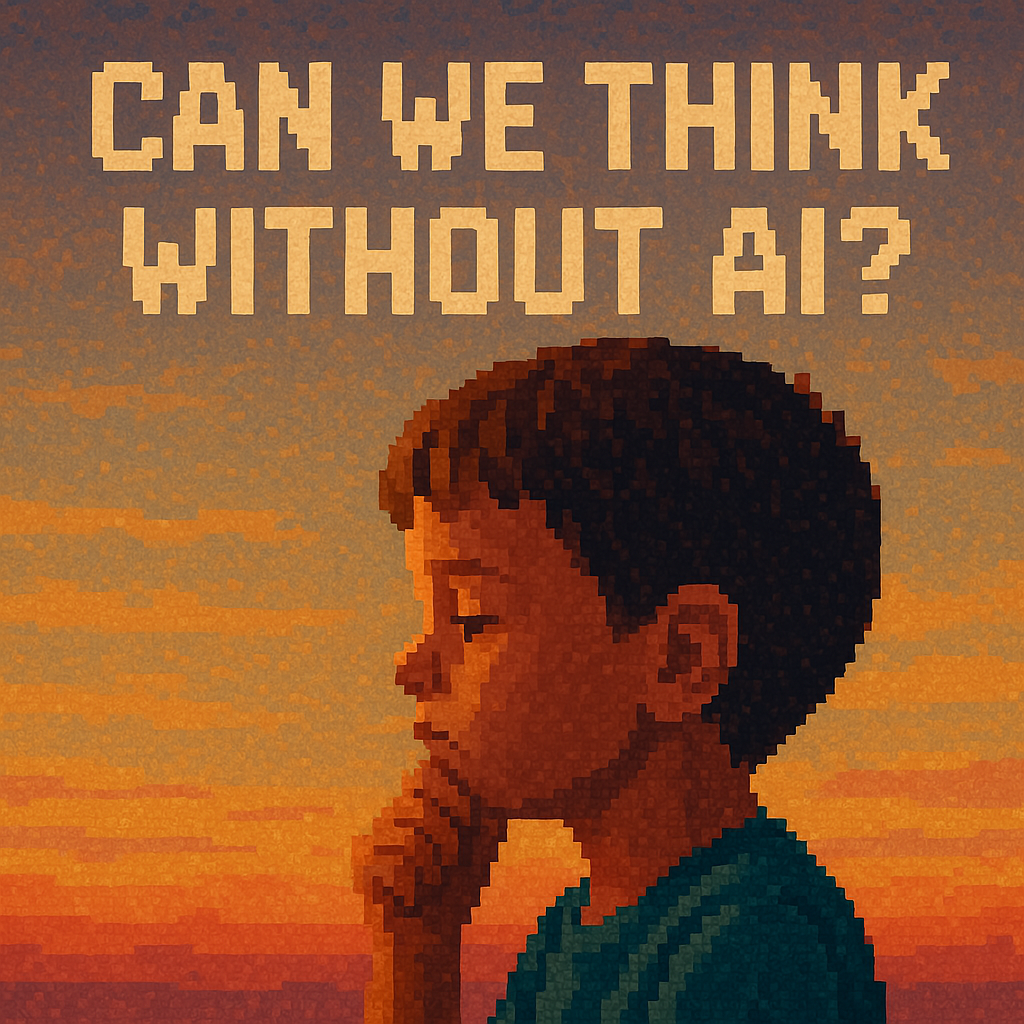
I've been reflecting lately on the shifts that Large Language Models (LLMs) have already begun to make on our society and culture. Forget AGI or ASI for a moment, those might completely reshape everything as we know it but even today's AI is quietly rewriting the way we live, work, and perhaps most importantly, the way we think.
I've recently been interviewing computer science graduates. Interestingly, I've noticed they're quite solid when it comes to theoretical knowledge and system design, yet surprisingly weaker in actual coding skills. Of course, this is anecdotal, but I suspect it points to a broader trend: they're simply not coding as much. Why would they, when AI does most of the heavy lifting?
Now, let's take this idea a bit further and think about a child born right now, today, in this world filled with AI. Will that child ever learn to truly write, or will AI take care of that from the start? Will they know how to think independently, or will AI always be there, gently guiding or perhaps shaping their thoughts? What about life's biggest decisions: careers, relationships, personal values? Will they genuinely make those decisions, or choose an AI that decides for them?
As these kids grow into teenagers, will their friendships and romantic relationships be authentic choices or directions from algorithms telling them who they're most compatible with? Can independence and individuality exist when AI quietly handles life's complexities?
My suspicion is no. We've already entered an era where it's becoming increasingly difficult for us humans to define ourselves apart from these powerful tools. We've seen similar debates with Google and the internet, but back then, we still did the heavy lifting ourselves. This time, AI has taken over.
That's the real power and the immense responsibility that comes with these tools. We're not just changing the way we do things; we're changing what it means to be human. It raises profound philosophical questions: What does it mean to think? What does it mean to be human, if AI can simulate much of what we've traditionally seen as uniquely ours?
I don't have the answers. But these are questions worth thinking about now, while we still have the chance to shape our relationship with AI consciously.
(This post was generated with the assistance of GPT-4.5.)